Showing posts with label justice. Show all posts

Friday, 17 February 2023

Democracy Under Threat


We held an exceptional Salon on Israel and Democracy on Wednesday. You can catch up here. https://fb.watch/iK-WV_tZzQ/


One important question came from a member who asked what democratic grounds exist for disputing the will of a government elected, as Israel’s government clearly is, by a clear majority. It’s an important question, if somewhat of a canard.


Democracy is indeed, ‘power exercised by the people’ but for that power to be measured, the mechanical structures, the constitutional arrangements, are at the heart of the matter. Even in Judaism – where a perfect God is the assumed source of obligation – an entire Seder of Mishnah is dedicated to the careful balancing of the expression of power. How are courts to be set up, who serves, who holds power over whom? When it comes to the expression of the will of humans - fallible, corruptible and power-hungry as we are – the need for controls become even more important.


As a Jew, the phrase ‘power exercised by the people’ evokes a particular and particularly deeply rooted reaction. I’ve struggled to explain this in inter-faith and non-faith settings. Visions of pogrom-ing Cossaks and Nuremberg rallies flash before my eyes. And besides, as a Jew I’m more than at home in being dis-established and a member of a minority. Existentially, I believe in minorities as the source of creativity, progress and the test of ethical decency in society. Of course we are all minorities in one way or another. We should all be far more keen to ensure minorities are protected than lulled into the persuasive power of majorities.


The role of a democracy is to limit the unfettered exercise of power by the majority. It is to stop majorities thinking that decency comes merely through number. It is NOT to nod through the claims of the masses as if simply through their number they accrue an existential right to be considered decent. Faith, our faith, has a similar function. I spoke about this in a recent sermon inspired by the Reith Lecture of former Archbishop Rowan Williams. My sermon is here. http://rabbionanarrowbridge.blogspot.com/2022/12/why-be-religious-archbishop-rowan.html


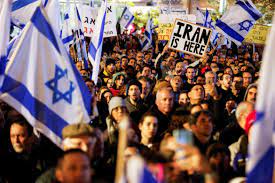
I’ve co-authored an op-ed in this week’ Jewish Chronicle on the threat to democracy in Israel, a threat coming from, I’m sad to say, from the duly elected majority. It’s a threat that needs to be pointed out, the democratic claims of the Jewish State are under threat. The article is here https://www.thejc.com/lets-talk/all/the-extremists-in-the-israeli-government-are-undermining-zionism-6BKSiwGbPuSBi2T91ZJcLM. It’s part of a campaign you can sign up to here https://choosedemocracy.org.uk/. I would be particularly keen to hear from members on this issue, particularly as we consider how best, as a community, to stand with and engage with this issue.


Shabbat Shalom,


Rabbi Jeremy  

Sunday, 4 September 2022

50 Years Since the Munich Olympic Massacre - And the Pursuit of Jusitce


This is a real story, a dark and bloody story, that happened 50 years ago Monday.

At the Munich Olympic Games in 1972, a group of Palestinian Terrorists broke into the Athletes Village, took members of the Israeli Olympic delegation hostage and killed them. Well, two were killed immediately and the other nine were killed having been marched from the village to waiting helicopters as part of a supposed negotiation for the release of over 200 Palestinian terrorists.

It now looks as though the Germans had a tip-off that an attack was planned, failed to protect the athletes in the village, and bungled a rescue attempt by failing to have anyone with experience in hostage negotiation or extraction involved. Mossad’s head of interrogation at the time, Victor Cohen, discovered later on that ‘some of the policemen who were supposed to take part in the rescue operation made a decision before it started that they were not ready to risk their lives for the sake of the Israelis.’[1]

And what about the Palestinians? On the one hand the murder was by a splinter group – which called itself Black September, on the other hand, there was delight across the Palestinian political spectrum. The bodies of the terrorists who died received hero’s funerals

And the Palestinian newspaper, Al-Sayyid, wrote, in pride,

[Nothing] could have had greater resonance with every person in the world than that caused by the Black September operation in Munich.[2]

So today, I want to do two things. I want to honour the lives of those murdered by those terrorists, then.

And I want to ask the question – what does it mean to say ‘Tzedek Tzedek Tirdof’ – justice justice pursue in the aftermath of an appalling act of murderous terrorism?

The response of the Israeli government is well known.

On September 11 1972, the cabinet authorized prime minister, Golda Meir, to approve the assassination of targets even in friendly countries, without notifying local authorities. “Retaliation or no retaliation,” Meir told the Knesset on September 12, “at any place where a plot is being laid, where they are preparing people to murder Jews, Israelis—Jews anywhere—it is there that we are committed to striking them.”[3]


And so it began. You may have seen the movie, or read the book, a systematic attempt to assassinate those responsible for the attack.

First up – Wael Zwaiter who was shot in the stairwell of his Rome apartment. Next Mahmoud Hamshari was blown up by a telephone bomb, and so operation Wrath of God continued.

I’ve been re-reading the remarkable Rise and Kill First by Ronen Bergman which tells the story with astounding precision and insight. Bergman writes,

Whenever [Zvi Zamir, Mossad Chief], asked [Prime Minister Meir] to sign a “Red Page,” as the kill order was called because of the color of the paper it was typed on, she would convene a select group of her cabinet ministers to deliberate with her—including her minister for religious affairs, Zerach Warhaftig, who would anoint each mission with a religious stamp of approval.

A religious seal of approval. I looked up the biography of the minister for religious affairs, Rabbi Warhaftig – one of the signatories of Israel’s declaration of Independence. He was a holocaust survivor who came to fame having negotiated thousands of visas from Japan and Holland to allow Polish Jews to escape the Nazis. I wonder what was on his mind as, in Bergman’s phrase, he ‘anointed each mission with a religious seal of approval.’

It's not that Judaism is pacifistic. There are plenty of death sentences meted out in the Torah. One that I often think about is

Leviticus 20:9 – anyone who curses his father and mother should be put to death.

Parents here, you can thank me later for sharing that one.

There’s also a Biblical command to defend oneself from criminal threats. In Exodus the Bible says that if you discover a thief breaking into your house in the middle of the night, you are not to be considered guilty for killing them – the understanding of the Rabbis is that if a thief is breaking in at night they have to expect someone is in, which means they can be assumed to strike you if you disturb them.

But there are Biblical verses that lean in a different direction – in a number of places the Torah instructs the construction of Cities of Refuge. If one person kills another, and it was an accident, and the person – in the lang of the Torah ‘didn’t hate the person from their past,’ they can run to one of these cities and stay there safe from retribution. Not that the doctrine of the Cities of Refuge applies to the terrorists behind the attacks in Munich.

And hovering over all the legal back and forth is this most stunning Biblical idea – that every human being, even the cruelest and wicked, is created in the image of the Divine, and any life taken destroys that spark of divinity and worlds of possibility. And while, of course, that applies to the descendants and the descendants of the descendants of those murdered so cruelly, it also, radically applies to terrorists and murderers. All life is quite literally sacred.

But when it came to the killers of the Israeli Olympic team in Munich what do you do? Turn politely to the Libyans and ask for them to be extradited, or put on trial in a foreign jurisdiction.

I don’t want to suggest that these are easy decisions, particularly for those who are placed in positions of great national responsibility, particularly for a country like Israel, up against so much, with memories of Nazi genocide so alive.

But the problems of a violent response to violence are many.

The most quoted verse in this week’s reading reads ‘Justice, Justice you shall pursue.’ My favourite explanation of the importance of repeating the word ‘justice’ comes from Martin Buber. The only way to pursue just ends, Buber argues in Ten Rungs, is to pursue just means. Creeping up in the middle of the night, and shooting a man to death in the stairwell of their building isn’t a just means.

And maybe, that particular killing is problematic for another reason. The man shot in his stairwell might just have been a Palestinian with no direct connection to the Munich atrocities. One former Israeli agent told Bergman,

“Zwaiter had nothing to do with the killing of the athletes.’ Another called the assassination of Zwaiter “a terrible mistake.”[4]

Back in the days of the Sanhedrin 70 judges would be called to decide on any capital case, and if only one felt there was a shadow of a doubt, judicial killing would be out of the question. And in the end, the entire apparatus of judicial killing fell away. Rabbi Akiva famously said that any Court that sentenced one person to death every 70 years should be considered a Bloody Court.

To add to the danger of mistakes comes this powerful truth about violence. Violence doesn’t build peace. If the goal is a world in which Israeli athletes, none of us, has to worry about terror and violence, how do we get from here, or then, to where we want to be? If they kill eleven of ours, we can, perhaps, strike back and kill 22 of theirs, but … Gandhi wasn’t wrong when he argued ‘an eye of an eye only ends up making the whole world blind.’

Bergman’s book – Rise and Kill First is more than a telling of the Munich story, it’s the story of a very Israeli attitude to the appalling violence, terror and threat the country has experienced in its short life – from British officers in the mid-40s, to Iranian nuclear scientists in this century, Israel has held firm to a line that you mess with us, we will come for you with a greater force than you came for us.

So many of the great political leaders of Israel are men – largely men – for whom this has been their life. Ehud Barak, former Prime Minister, was one of the crack assassins sent into Beirut to take out four of those Israel believed were responsible for the Munich murders, as was Yonatan Netanyahu, brother of another former Prime Minister, Bibi. Being tough, and uncompromising in the hard line that promises death will come to anyone messing with Israel has long been a vital strategy for anyone who wanted political power in Israel.

But Bergman’s book contains another voice. Time and time again, leaders of Mossad and similar crack teams – the Caesarea Operatives, Shin Bet, Sayeret Matkal, at the end of their careers and, in some cases, at the end of their lives, have come to argue again this policy.

Most dramatically there is the case of the former head of Mossad, Meir Dagan, a man who authorised any number of targeted killings, who at the end of his career, turned against then Prime Minister Bibi Netanyahu for misapplying the tactic of targeted killing, for not doing enough to find other tactics – pathways towards building peace. What, Dagan wonders, if all the energy, the bravery, the courage and the incredible resources that Israel has invested in the targeted killing of her enemies, what if all that had been invested in changing hearts, not stilling hearts.

That’s not the view of a wishy-washy liberal armchair liberal that’s the view of a Mossad Director, a man who had, in Bergman’s line, ‘a knife between their teeth.’

Justice, justice you shall pursue, tricky.

Justice, especially in the threat of terror is tremendously difficult, only a fool looks at a complex situation and sees simple solutions.

Meeting violence with violence will always tempt us, especially if we feel we are physically stronger, but violence cannot build towards peace, and somehow we need to keep a space for our dreams for peace, we need to pursue peace and build toward it, even if other avenues tempt.

And maybe that’s the greatest lesson for us all – for those of us who have the fortune not to be at the very sharp end of these impossible decisions – when someone or something does something bad to us, there will always be a temptation to respond with a simple response, perhaps a forceful or an aggressive response. It might even be fair to so do, but it will always behove us to check those temptations – how are we building for a better future? How can we respond to the bad done to us in such a way as to lessen the chance that someone else will even want to do bad to us again?

It was the great 1st Century Rabbi, Hillel, who called on us all

הֱוֵי מִתַּלְמִידָיו שֶׁל אַהֲרֹן, אוֹהֵב שָׁלוֹם וְרוֹדֵף שָׁלוֹם, אוֹהֵב אֶת הַבְּרִיּוֹת וּמְקָרְבָן לַתּוֹרָה:

be like the students of Aharon, brother of Moses, who love peace and pursued peace, who loved creation and drew them closer to the correct instruction.

Shabbat Shalom


[1] Bergman, Ronen. Rise and Kill First: The Secret History of Israel's Targeted Assassinations (p. 151). John Murray Press. Kindle Edition.

[2] Bergman, Ronen. Rise and Kill First: The Secret History of Israel's Targeted Assassinations (p. 152). John Murray Press. Kindle Edition.


[3] Bergman, Ronen. Rise and Kill First: The Secret History of Israel's Targeted Assassinations (pp. 152-153). John Murray Press. Kindle Edition.

[4] Bergman, Ronen. Rise and Kill First: The Secret History of Israel's Targeted Assassinations (p. 161). John Murray Press. Kindle Edition.

Friday, 6 August 2021

Justice in Reverse - Parashat Re'eh


At the heart of this week’s Torah reading are two verses about poverty. First comes the statement, “There shall be no destitute people among you.” (Deut 15:4) and then a mere seven verses later, “There shall be no end to destitute people among you,” (Deut 15.11) and that second verse continues with the command “surely open your heart to your fellow,” and other instructions on the relief of destitution.


Surely, it’s backwards? Surely the better order of verses would be to start with destitution and the idea that if we support the relief of destitution appropriately – we might eventually reach a place where it no longer exists.


I caught an interesting reflection on the problem in a DevarTorah by Rabbi Lauren Henderson. She suggests that justice, the relief of poverty, has to begin with an act of imagination. We need to start from a position of imagining a world of fairness, equality and possibility for all – a world of no destitution. And then we need to shoulder the obligation to match our dreams with our actions – there is no end to destitution, so open your hand. The pursuit of justice begins with a vision of a just world.


As is so often the case, the experience of walking the streets is its own kind of Torah. There is a poor person begging. I open my hand (on those occasions when I do) to give them a few pennies and I shuffle on my way. But that encounter – as necessary as it might be – fails to connect with a vision of the end of destitution. It’s not enough. I need to be niggled by my failure to match a charitable act with a vision of a just world. I need to do more.


Rabbi Lauren’s reflection sits beautifully in the context of the rest of Chapter 15 of Deuteronomy where the laws of the Seventh Year – the Sabbatical of rest – are articulated. New visions can arise only when we take a moment to pause and reflect. It makes sense in a time of Covid where we have all been forced to reflect, re-evaluate and, hopefully, re-imagine our futures. It makes sense at this point in the calendar where so many of us are experiencing the change of pace of the deep summer, recharging and reflecting on how to shoulder the obligations of the upswing of the year to come. This is the last Shabbat before the new moon of Elul. Rosh Hashanah is coming. Can we hear that distant Shofar call as a summons to dream, first, of a just world and our place in it?


Rabbi Lauren wrote her Devar Torah for T’ruah, an extraordinary organisation in the US, which articulates and works towards the vision of justice envisioned by Deuteronomy. I recommend signing up for their Torah https://truah.org/ and I’ve given, this Shabbat, to support their vision.


Justice may need to begin in reverse.


Shabbat Shalom


Saturday, 11 September 2010

2nd Day RH Sermon - Tzedakah and This Community

Yesterday I spoke about Israel and relationships.

Today I want to talk about this country, this community and Tzedakah

The good news is I’m not after your money.

Giving away money is tremendously important but Tzedakah is mistranslated as charitable financial giving. It means more than that.

Nor is Tzedakah to be equated with acts of loving kindness - doing nice things for people who need our help is also important, but it’s also not Tzedakah.


Pursuing Tzedakah means we must participate in the creation of a just society.


And the Bible takes the command to pursue Tzedakah so seriously we’re commanded to do something about it twice in one verse.

Tzedek Tzedek Tirdof demands the Torah

Justice, justice you shall pursue

Why the double use of the term Tzedek, wouldn’t it have been enough to hear the call once?

I wonder if it has something to do with the way Tzedakah makes a sort of land-grab at our lives. It’s a pushy term.

Teshuvah, Tefilah are both so private, so internal, but Tzedakah stretches its tentacles outwards beyond our own lives and into the society we live in.


This has been a general election year and I’ve had three experiences, this year, where as a Jew, a Rabbi, I’ve been invited to become part of the national debate; three invitations to engage with the issue of Tzedakah in the public sphere.


I was invited to Number 10 Downing Street earlier this year, along with a bunch of other Rabbis and Jewish communal leaders to celebrate the launch of UJIA’s myfund initiative.

The idea behind myfund is that teenagers, and those preparing for a Bar or Bat Mitzvah, should study a curriculum on Jewish attitudes to justice, charitable giving, chose a project to support and then for every pound they raise to give away UJIA will match them pound for pound.

It’s such a novel – and I think brilliant – idea that the Browns invited a bunch of Jews to tea to talk about it.


I had the honour of taking part in a pre-General Election hustings attended by the then Prime Minister and the current Prime Minister and Deputy Prime Minister. I was one of the co-chairs as Citizens UK put Messrs Cameron, Clegg and Brown through their paces on their commitments to justice; justice for refugees, justice for the low-waged, justice for those unable to afford a home. You may have seen the coverage.


I’ve even been invited to meet with UN General Secretary Ban Ki-Moon at a meeting at Windsor Castle in the run up to the ultimately terribly disappointing Copenhagen Round. And while, in part, averting ecological disaster will require us learning how to depend less carbon - in global terms, thinking about the Environment is an issue of justice.


What is going on?


Well I don’t think it has much to do with me or even the illustrious history of this community. Nor has there been a mass outbreak of Anglo philo-semitism. Our friends at CST tell us the anti-semitic attacks are at an all time high and, let us not forget, Nick Griffin and his despicable British National Party took over half a million votes in the General Election.

It has to be something else.


I want to share three lessons which I think can be learnt from this invitation onto the public stage and the concomitant calls that these lessons make on our lives in the year ahead.


Firstly

We, as Jews, have a contribution to make.

I want to take just one example of a distinctive Jewish contribution to one of the most important issues of our time – how should we function as a multi-cultural society. And how should the various cultures assimilate into one another.

We are, of course, proud multi-culturists, we’ve been a refugee community. To some extent we are.

When if comes to issues of how our society, should treat immigrants, refugees, economic migrants …. we have thousands of years of experience suggesting how awkward, different, potentially economically challenging newcomers should be included or what happens when they – we – are excluded.

This is our story.

I was at a training with the Community Organizing group Citizens UK when a sixteen year old Somali refugee – a Muslim from the East End – right round the corner from where my Grandfather lived – asked me if I minded him asking me a question.

He wanted to know why there were so many Jews in the media. That old canard. My hackles stood up, but I didn’t feel I could brush him off with the suggestion of his anti-Semitism, actually – coming from where he came from it seemed a reasonable question. I told him I didn’t know why so many Jews were in important positions in media, business, academia or the rest of it, but I did know that the parents or grandparents of these tycoons lived in the same streets as he did, in the same crummy tenements. Thy experienced the same racism, had the same economic disadvantages, the same difficulties in getting health care, education – actually greater disadvantages, but had worked their way out of the ghetto. We ended up having a conversation about learning English, study, family values and the things a person can learn sitting on the edges of a host community.


It could be economics, welfare, ecology, banking, crime any of the big issues facing us today. As Jews, I believe we have distinct insight, we have a contribution to make.

And I believe that society is interested.


The second reason I believe Jews are being welcomed to the top table has to do with a shift in the culture of political philosophy.

John Rawls, perhaps the greatest contemporary writer on justice suggested that if we wanted to know what a just society looked like we would have to erect a ‘veil of ignorance.’ You would have to imagine yourself behind the veil, in a place where you didn’t know if you would turn out male or female, black or white, rich or poor. In that ignorant space we would, Rawls thought, determine a truly fair society because we wouldn’t know how we would turn out once the veil was removed. It’s a mighty idea, but it’s been superseded by the mightier insight that suggests that because I am who I am, it makes no sense for me to imagine myself behind a veil of ignorance. I’m never going to think like a woman, a black person, a poor person, a disabled person, so it’s not particularly useful to pretend that I can.

Instead, say thinkers like Reith lecturer and Harvard Professor Michael Sandel, we need to acknowledge we are ‘situated selves’ – we judge society as fair or unfair because we are who we are, in my case male, middle class, white and Jewish. And if we want to create a just society we need proud and clear thinking representatives of the different constituent members in society.

We need women to be women, men to be men. We need black people to be black and rich people to be rich, poor people to be poor. And we need Jewish people to be Jewish. To work out what a just society needs, we need people to speak up and speak from their situation, not pretend they can transcend it.


I believe broader society, political society, is learning to respect the situation of its members, rather than impose on all of us that we enter the public sphere stripped of our selves. More to the point there is a recognition that we are truer to our selves because of our situation and that asking us to lose our situated nature makes us a fraud, a pretend normal person – and that’s not helpful to anyone.

Jews are no longer allowed to enter the public sphere (like Disraeli) on the condition that we reject our Jewishness.

Rather we are welcomed into the public sphere precisely because of our distinctiveness – our Jewishness.


We have a specifically Jewish contribution to make to creating a just society.

And we are being invited to make that contribution precisely because of our distinctiveness – our Jewishness.


And thirdly this.

To my grandparents this was axiomatic.

To my parents’ generation this is still largely practiced.

In the past Jews would ignore what went on in the society around us in the hope that society would ignore us.

‘Keep your head down’ was the motto.

The tale was told of the entirely Jewish jury who, after weeks of deliberating the case of some non-Jew were asked by the judge if they agreed on a verdict.

‘We have, your honour,’ said the foreman,

‘So what is your verdict?’

‘Your honour,’ responded the foreman, ‘we’ve decided we should not mix in.’


But this is just not a sense I feel from the younger generation.

I spoke a little about this yesterday, younger Jews want out of the ghetto of pursuing self-interest to the exclusion of all else. We no longer want to judge every agenda from the limited perspective of how it impacts on the Jews.

Of course we need to support our own, our own Shuls and care agencies, but that’s not enough.

Our tradition teaches that we have obligations towards the poor, the ill and the dead of the non-Jews as well as the Jews because – and the Hebrew term is, I think tremendously important – because of Darkei Shalom.[1]

The term is usually translated as the ‘ways of peace.’

But peace doesn’t convey the true sense of the word Shalom.

Shalom means a sense of completeness.

When we care about the needy around us, when we care about the justice of the society in which we, and our fellows, live. We build a more cohesive shalem society for us all.

It is not a zero sum game.

The more justice there is in society, the better it is for us, as Jews, as citizens.


  • We have a specifically Jewish contribution to make to creating a just society.
  • And we are being invited to make that contribution precisely because of our distinctiveness – our Jewishness.
  • And the more we become involved in creating that broader, more just society, the better it will be for us, as Jews and members of that broader society.


These three insights make three calls on us.


Firstly

If we have a contribution to make to the issues of justice that surround us we have to understand and demonstrate that insight in our day to day actions.

If we feel that our understanding of Shabbat is a useful counter-voice to the all consuming power of market forces, we need to observe Shabbat.

If we feel that our understanding of what it means to be a refugee gives us a useful voice to share with today’s refugees, we need to volunteer our time, support the work in this community of the Separated Child Foundation or Citizens UK.

We must know our tradition and we must live the values of our tradition with integrity. Otherwise we risk forgetting what we should hold most dear, we risk becoming a fraud.

We should never risk becoming a fraud.


Secondly, if we are welcomed to contribute to the creation of a just society because of our situated Jewishness we need to take care that we retain our distinctiveness. To those of you who struggled to justify taking a ‘second day off’ to stand with us this Rosh Hashanah morning, I salute you.

To those of you who order your way around a restaurant menu because you don’t eat meat out, I salute you.

To those of you who explain to your demanding employers that you need to leave work on Friday evenings, I salute you.

Because it is through these myriad of small actions that we retain and strengthen our distinctiveness – it is through our acts of Jewish engagement and involvement that we are true to our situation – less a pretend normal person.

We must guard our distinctiveness.

We must be proud to be situated.


And, thirdly, we must ‘mix in.’ We must do something just.

I’ve spoken a number of times of the work of Citizens UK. They are the organisation behind the end of child detention of refugees, the campaign for a living wage and other important initiatives creating safe streets, opposing sex-shops and more.

I’ve never encountered an organisation that better understands the values of situated selves. I’ve never encountered an organisation so genuinely open to the contributions of its members.

And I don’t think I have ever encountered an organisation that is as powerful and capable of creating the just society I want to live in.

Of the 150 member organisations of London Citizens – the Churches, Mosques, Residents Associations, Schools and the like there are no Synagogues. We should be members, frankly we should be the first Synagogue to join up.

If you are interested in this work, or other justice work in or beyond this community, please let me know.


The pursuit of Justice requires us to live out the values of our tradition.

It requires us to be situated, distinct and proud of who we are and where we come from.

And it requires us to act Justly in creating a broader more just society.


And while I make no promise that living a life more infused by Tzedakah in this coming year will guarantee us a Gezerah Metukah – a sweet decree.

It will make the world sweeter for others, and that makes us more worthy of being inscribed for the year of health and happiness for which we all dream.


May it come to us all.


Shannah Tovah


[1] Tosefta Gittin 3:13-14, TB Gittin 71a, Mishneh Sheviit 4:3, Rambam MT Hil Avel 14:12, Hil Matanot 1:9, etc.

Related Posts Plugin for WordPress, Blogger...