Showing posts with label ecology. Show all posts

Friday, 15 September 2023

Accommodate the Environment - A Sermon for Second Day Rosh Hashanah 5784


The choice of subject was easy. I wanted to talk about the environment today, partly because it’s possibly the most significant area of our lives where we, as humanity, owe a responsibility to our Creator and our fellow human beings to change. And partly because it’s proving so difficult for us, as humanity, to make that change. We’re stuck.

There’s an old joke that feels less funny every time I hear it. A man is taking shelter in a storm. And an announcement comes over the radio that everyone should evacuate. But the man reflects that since he’s a decent person, God will take care of him. So he stays put.

And when the waters start to rise and a storm marshall comes, knocking door-to-door, telling everyone to evacuate, the man protests his decency, assures the marshall God will take care of him and stays put.

And when the waters rise higher, and the man escapes to the roof of his house, a helicopter comes whirring by, and the pilot, through the loudhailer, tells the man to hang onto a rope and be winched aboard, and the man protests his decency and refuses to leave.

And when the man drowns in the flood, he insists on a private meeting with God, “How, God, could you do this to as decent a man as myself.” And God responds, “Who do you think sent the marshal and the helicopter?”

I did warn you, it’s not as funny as it used to be.

I’m not going to do the facts, I think we all have enough of a sense of the facts.

The problem is the link between the input of the facts and the output of a transformed relationship with our natural environment.

I’ve been thinking about an idea attributed to the great Swiss psychologist, Jean Piaget.

Piaget’s thought we deal with new destabilising knowledge in two ways; we assimilate and we accommodate. When we assimilate new knowledge, says Piaget, we add the incoming knowledge to the sense of the world we have in place without having to alter anything, without having to alter our schema.

The example of a dog will do. Let’s say, our parent shows us, as a child, a picture of a four-legged, furry creature and tells us that this is a dog – dog, got it. We go to the park, and there’s a four-legged, furry creature that, suddenly, barks. And we don’t know what to do with this new knowledge, but, hopefully, someone confirms to us that, despite our concerns, this is nonetheless a dog, and we assimilate into our schema of ‘dog’ that dogs bark.

But what if, having been shown a picture of a four-legged, furry dog, we go to the park and see a four-legged, furry creature that miaows. Again, we are going to be thrown a bit, but, hopefully, someone confirms to us that this is not a dog, but a cat. And we accommodate our schema, we create a new way of understanding that four-legged furry creatures that miaow are NOT dogs, but instead a cat.

So assimilation – there’s new information out there, and it momentarily destabilises us, but we assimilate that information into our existing schema, and we go on with our lives unchanged.

And accommodation – there’s new information out there and we are destabilised to the extent that we change our schema, and change our understanding of the world.

The issue, I think, with our relationship with the environment, is that we keep assimilating new pieces of information into our existing schema. And don’t accommodate our schema to change.

We encounter a bit of information that suggests our actions are destroying the planet and we will ourselves into a belief the science isn’t clear, or that it isn’t not going to affect us, or that we can’t do anything about it or any one of a litany of different emotional responses that allow us to carry on regardless, or with just enough of a response that we kid ourselves we have greenwashed over an ecological sin. Ahhh the human psyche.

I hope this helps, just naming and calling the difference between an assimilating response to destabilising information and an accommodating response. I hope it can help us accommodate, and change.

But I want to share three other ideas, religious ideas, Jewish ideas that, I hope, can help us accommodate to the environmental challenge, in this year to come.

The first has something to do with the way we treat eco-warriors, or doomsayers, or extinction rebellion protestors or … those sorts of people.

Prophets Are There to Help, But It’s a Tough Job – So Be Nice

When God tells Moses to stand before Pharoah, Moses doesn’t want to do it. He’s convinced no-one will believe him. When God tells Isaiah to instruct the Children of Israel to change their ways, Isaiah says, and this is the original Hebrew, Oy. When Jonah is told to prophecy destruction, he thinks he’s more likely to be killed than change the ways of the people of Nineveh.

I think many of the great, and not so great, ecological prophets of our time would absolutely understand how they felt.

But were it not for Moses, or Isaiah or Jonah …

I’m reminded of the Talmudic account of how Rabbi Yochanan Ben Zakkai saved Judaism. The Jews of Jerusalem had barricaded themselves inside the city and the Biryoni, the Jewish leadership inside the city, threaten to kill anyone who even suggests negotiating with the Romans. It took Yochanan Ben Zakkai’s remarkable leadership to see that the path followed by the Biryoni was self-destructive, and it took bravery, even a foolhardy bravery to do something about it.

The prophetic voices are there, in our faith and beyond. They have warned us of exactly what has already happened and they are still warning us of what is to happen. We have to stop barricading ourselves in and shooting the messengers.

Responsibility over Rights

There’s a remarkable line in the Talmud that suggests that a person who doesn’t make a blessing before and after eating is a thief. It’s thieving from God, and blessing is how we seek permission. Because the food we eat, it’s not really ours, not even if we planted it, or paid for it with our earned wages. The same goes for, well, everything. The clothes we wear, the roof over our heads, even the very breath in our lungs. Consumption is not a right, but a responsibility, in Hebrew a Chovah, literally a debit. We are stewards of our possessions, there is only one Master in the Universe and we were placed on earth LOvdah UleShomrah – to serve and tend, not as a god ourselves.

Laws of Shabbat, sabbatical and on and on the list goes can be understood as an attempt to inculcate in us a sense, as it says in the Leviticus that gerim v’toshavim atem imadi – we are strangers and temporary dwellers on God’s property. It’s not ours, even if we are temporarily in possession.

We are not a better or a worse person because we have more, or less, of one thing or another, but we because of how we steward that temporarily in our hands. It’s a remarkably freeing idea. It should free us from the suffering Buddhists articulate so well – that our cravings for temporal material objects bring pain.

But it’s a salutary idea too. Freed of the notion that accumulation is important, we should find it easier to understand that many of the things we chase, we do not genuinely need, we could genuinely do without and, for sake of the planet, we must learn to do without. There are radical changes we need to make to our lives. And, of course, that will feel scary. But we, as a nation, as a species, we’ve made dramatic changes before. Once upon a time, smoking was a fine thing to do, drink driving was fine, human slavery was fine. We’ve changed before, we can change again. We can cut down on our use of petro-carbons, plastics, air miles, it’s not that hard.

I think that seeing the resources of the world as our responsibility, not our right, will help.

We Are the Weather

And finally this. Here are some of the most significant verses in our faith – they come from the second paragraph of the Shema, we recited them last night, and this morning. If you are good, it says in the book of Deuteronomy, “there will be rain in its season. You will gather in grain and wine and oil” But if you are not good, “God will shut up the skies so there will be no rain and the ground will not yield its produce and you will soon perish from the good land God is giving you.”

Or, later in the Book of Deuteronomy, just before Moses passes away, he repeats the idea. If you do well, God will “open for you the bounteous store of the heavens to bless you.” But if you do not do well, “God will strike you, scorching heat and drought; the skies above your head shall be copper and the earth under you, iron.”

Some 3,000 years ago, Moses suggested we are the weather. We are the reason it rains or doesn’t - or rains as and when it should, or floods and destroys when it shouldn’t. It is our doing and it is our fault.

And at one level, this Deuteronomistic way of thinking is so easy to disprove. It feels so obviously absurd when we know there are good people who suffer drought and wicked people who experience plenty. And for three thousand years theologians have argued and pontificated and struggled to explain these seemingly absurd verses.

And then along comes climate catastrophe.

And now, suddenly, this way of thinking about the environment feels obviously, transparently, true. If you cut down all the trees, and if you don’t take care of the ecosystems and if you don’t … and if you don’t … then you are the weather.

It turns out that the way to solve the absurdity of how to make sense of these verses was to think about the environment. Let greed and wanton consumption run unfettered through the planet for 250 years or so and we’ll absolutely get copper skies and iron earth. It will all come to pass, just as Moses always said it would.

Here's the good news.

If we are the weather as we turn the skies copper, we can be the weather in healing some of the scars we’ve inflicted. We know there are things that can work and maybe, maybe even whisper it, are already starting to work.

We are powerful, if we can unite and organise and, perhaps most especially, if we can be prepared to put up with inconveniences today so we don’t mess things up too badly tomorrow. I urge us to try.

We need to listen to the prophets. We need to recalibrate our relationship to stuff to make sure we treat consumption as a responsibility not a right, and we need to take seriously that we are the weather.

It's not that we don’t know what to do. It’s that we have allowed ourselves to assimilate the greatest challenge of our times into something that doesn’t require our attention. In this year to come, for all our sakes, and the sake of our human future on this planet, may we learn to do differently.

And may that bring us the year of sweetness and joy that we wish for ourselves.

Shannah Tovah


Friday, 30 June 2023

We Are the Weather


And then it was the water.

In these strange times, as we lurch from pandemic to climate catastrophe to military invasions to …. oh the next thing, I wasn’t expecting to hear the news about the water companies this week.

I knew a bit about the privatisation of state utilities under the Thatcher Government. I wrote school projects about the privatisation of British Gas when I was, Avery, just about your age – anyone else remembers the ads ‘Tell Sid’? And I wrote essays about privatisation for my A-Level economics.

The plans all sounded perfectly sensible to my 13-year-old self. Everyone would win, we were told. But it’s now turned out that Thames Water is on the brink of collapse, having borrowed billions which have been used to pay dividends rather than fix the pipes. I caught a new, to me, phrase in one report that suggested the water company I pay a fortune to is ‘environmentally insolvent’ because they can’t afford to pay for cleaning up their own spilt sewage. ‘Environmentally insolvent’ – has a very contemporary ring to it.

I imagine Moses would have had some sympathy for contemporary political leaders. He also is in the midst of a run of catastrophes, from arguments over meat – we read that story three weeks ago, to two full-on insurrections – the story of the spies two weeks ago and the rebellion of Korach last week. And now there’s no water in the wilderness wandering of the Children of Israel.

“The community was without water, and they protested against Moses and Aaron saying ‘If only we had perished [before now] why did you make us leave Egypt to bring us to this wretched place. There is not even water to drink.’”

For thirty-eight years, at this point, the Children of Israel have been wandering through the wilderness sustained by manna, a miraculous food that was just there for them and water that, in the eyes of the Rabbis came from a spring that followed them around so they never realised they shouldn’t take it for granted. And now, as the water suddenly dries up, they realise the things they thought they could rely on, they ain’t necessarily so.

It’s fascinating that this run of complaints and failings of the Children of Israel beings with a complaint about food, and ends – this week – with a complaint about water.

Jonathan Safran Foer, in his book, We Are the Weather (I’ll come back to that phrase later) suggests that “the problem with the planetary crisis is that it runs up against a number of built-in “apathy biases.” [And that despite] many of climate change’s accompanying calamities – extreme weather, floods, wildfires and resource scarcity among them – are vivid and suggesting of a worsening situation, they don’t feel that way. They feel,” [Safran Foer writes] “abstract, distant and isolated.”

It's food and water that feel so much more immediate. Perhaps it’s the food and the water that will break us out of our apathy biases. We’re not very good at noticing the Amazon rainforest is disappearing or sea levels are rising, but we’ve certainly noticed how much more expensive food is getting. And we’ll notice the uptick in water charges too. Here’s hoping we can connect one to the other.

Environment; weather, food and water, tend to work in one of two ways, in the Hebrew Bible.

In the first way, God flicks switches and it is so. There goes light. There goes darkness, or seas, or grasses or fruit trees and it is so. A little later, God brings plagues; infestations, crop devastation and the like, as a way of ensuring the Egyptians know just who is really in control of the world – it’s God, not some jumped up Pharoah. And, by the time we get to the book of Job, the weather – the storms and the earthquakes and terrors of the deep are part of how we – or Job at least – is supposed to understand our place on this planet. We’re not in control. It’s a way of thinking about the environment that has, or at least had, great appeal, right up until the dawn of the industrial revolution. But I’ll come back to that.

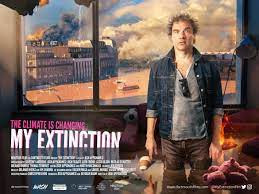
Devorah Baum, friend of the community, talked about this modality of our relationship with the environment in a speech that features in the brand-new eco-documentary, ‘My Extinction.’ The doc is great, I recommend it heartily. Watching it is the reason I’m giving this sermon today. She noted the verses in Ecclesiastes, “There is a time for everything, a time to plant and a time to uproot,” is dangerous. It tells us that everything is cyclical. It suggests that if today is a little too hot, tomorrow will be cooler. The dominant voice of the book of Ecclesiastes is, you probably aren’t as powerful as you think, don’t get so worked up, and don’t get carried away with your own power. And there are certainly times when that’s a good message to hear, but it’s not going to fix the environment. It’s a dangerous way to think about our relationship with the environment.

And then there is a second modality of how the environment works. We read the most famous Biblical verses in the middle paragraph of the Shema. If you are good, it says in the book of Deuteronomy, “There will be rain in its season, both at the beginning and the end of the harvest period. You will gather in grain and wine and oil” But if you are not good, “God will shut up the skies so there will be no rain and the ground will not yield its produce and you will soon perish from the good land God is giving you.”

Or, later in the Book of Deuteronomy, just before Moses passes away, he repeats the idea. If you do well, God will open for you the bounteous store of the heavens to provide rain for your land and bless you.” But if you do not do well, “God will strike you, scorching heat and drought and blight and mildew, the skies above your head shall be copper and the earth under you iron.”

In this, other, way of thinking about our relationship with the environment, we are the weather. We are the reason it rains or doesn’t or rains as and when it should, or floods and destroys when it shouldn’t. It is our doing and it is our fault.

And here’s the strange thing about this second way – let me give it the fancy name they use in universities – this Deuteronomistic way of thinking. It’s so easy to disprove. The Deuteronomistic claim feels so obviously absurd when we know – as Moses is imagined testing God – that Tzadik v’Ra Lo, Rasha v’Tov Lo – there are good people who suffer and wicked people who do well. And for three thousand years theologians have argued and pontificated and prevaricated and attempted to explain a Deuteronomistic way of thinking about the world when it feels so obviously untrue.

And then along comes climate catastrophe.

And now, suddenly, the Deuteronomistic way of thinking about the environment feels obviously, transparently, true. If you cut down all the trees, and if you don’t take care of the ecosystems and if you don’t … and if you don’t … then you are the weather.

And it turns out that the way to solve the absurdity of how to make sense of the Deuteronomistic way of thinking was to think about the environment. The Deuteronomistic way of thinking about the world might not line up perfectly today, but give it a couple of decades, let the industrial revolution run unfettered through the planet for 250 years or so and we’ll absolutely get copper skies and iron earth because of our awful mistreatment of this beautiful planet. Give it a couple of decades and it will come to pass, right as Moses always said it would. We are the weather.

Here's the good news.

If we are the weather as we turn the skies copper, we can be the weather in healing some of the scars we’ve inflicted. We know there are things that can work and maybe, maybe even whisper it, are already starting to work.

We are powerful, if we can unite and organise and, perhaps most especially, if we can be prepared to put up with inconveniences today so we don’t mess things up too badly tomorrow. I urge us to try.

It will take a willingness to pay attention to the things we don’t find easy to see and it will take sacrifices we would rather not make. We need to fly a lot less. We need to eat a lot less animal products. And do a bunch of things that are inconvenient, but desperately obviously necessary. Perhaps most of all, we need to be more willing to speak up about our role in determining the weather. We need to get over our misgivings about sounding all prophetic and warning of the copper skies – I need to give more sermons like this. We all need to talk more about our ability to influence the weather with people we encounter in our everyday lives. We need to ensure that those we encounter know that it’s normal, sensible, decent people like us, like them, who are making changes and fighting for changes, and taking responsibility for the weather.

It's not that we don’t know what to do. It’s that we feel a little embarrassed, or it’s a little uncomfortable, or we retreat behind “apathy biases,” but we can take these piddling oppositions on, can’t we? We are, after all, the weather.

Shabbat Shalom

--


Friday, 8 January 2010

It's Been Snowing


Snow, of course it does, makes an appearance in this week's Torah reading. Moses, standing before the burning bush is told to remove his hand from his garment and finds it  'diseased, white as snow.' Indeed snow makes two other appearances in the Hebrew Bible as  a descriptor of the strange leprous-like Biblical curse of ‘tzarat’; Miriam becomes as white as snow  having slandered Moses and Elisha's manservant Gehazi  is similarly afflicted in II Kings.


The Bible also uses snow as a useful counter image, its ob    vious connection to cool winter days offering itself up for more poetic uses. In Proverbs we desire snow to cool the temperatures of a hot ancient harvest (Prov 25) and we suggest that that honour is due the fool to the same extent that snow is due in summer (Prov 26).  As a symbol, however, snow is most powerfully associated with purity from sin. In words central to our Rosh Hashanah liturgy we cite Isaiah, 'though your sins be as scarlet they shall be as white as snow ' and  Psalms, 'Wash me and I shall be whiter than snow.'  Uncomprehending and looking out over a  destroyed Jerusalem the narrative voice of the book of Lamentations can't understand what went wrong, 'Her Nazarites were purer than snow, whiter than milk.' Snow is the symbol of sin-free purity, and the image reaches its zenith when Daniel looks out and sees God, sat on a lofty throne, clothed in a  garment 'white as snow.'


Symbols are glorious, of course, but the Bible certainly knows real snow. Jeremiah looks out at the 'snows of  Lebanon' and two of the Psalms recited in our daily service  take the opportunity to ensure that we know that the power behind snow is divine, 'God gives snow like wool, he scatters hail like ashes.' 'Fire and hail, snow, clouds and stormy wind fulfil His word.' (Ps 147 & 148).


At the end of the book of Job, God puts on a display of all the great natural forces of the world in a bid to get Job to understand how little of the secrets of the Universe a mere human could possibly understand and there, amongst the volcanoes and earthquakes, we read of a storehouse of snow, saved up as munitions for  a battle against the forces of evil.


Snow's  radiance draws our attention to the heavens. It reminds us of the power of nature - it stops us taking gentle cycles of seasonality for granted. For those of us fortunate enough to be able to heat our homes and wrap up as we crunch our way down icy pavements snow should also remind us of our obligations to  those without the economic ability to banish miserable shivering or the physical ability to  leave their homes in what is a dangerous time to be frail and unsteady.


Shabbat shalom

Monday, 7 December 2009

Chanukah is coming and we are running out of oil


A short trip through a fascinating piece of Jewish legal history.


There have been very few great Rabbis have had the power to transform the communities they served.

One of these few greats was Rav Moshe Feinstein, a true giant of twentieth century American Orthodoxy.

Rav Feinstein was asked, on a number of occasions during the 70s and early 80s if Judaism permitted smoking.

And had Rav Moshe Feinstein said no, had he said that smoking was forbidden, tens of thousands of orthodox Jews would have stopped smoking – thousands of lives could have been saved.


Judaism believes in saving lives.

But on five occasions Rav Feinstein, in five separate legal responses to the question – if smoking forbidden, Rav Feinstein refused to deem smoking forbidden.

He said one shouldn’t start, he said one should probably try and stop, but he didn’t give ultimate priority to the legal principle,

Pikuach Nefeseh – saving lives takes almost absolute priority in Jewish law.

He didn’t give ultimate priority to the Mishnah that teaches that a person who saves a single live is considered as if they have saved the entire world.[1]

He didn’t give ultimate priority to the principle cited by Maimonedes that– guf bari vshalem midarchei adonai hu[2] keeping yourself healthy is the Godly ordained way.

He didn’t even give ultimate priority to the Biblical verse vnishmatem meod lnafshotechem[3] - a person should take great care of their self.

I could go on.

I don’t think Judaism permits smoking.


But the question is this.

What did Moshe Feinstein rely upon, what did he give ultimate authority to when he abstained from prohibiting smoking.

There are a couple of things, all, I think, absolutely rejected by, among others Rav David Golinkin, head of the Masorti Vaad Halacha.[4]

But the most interesting is this.


Rav Feinstein relies on the legal principle shomer petaim adonai – God protects the innocent/the simple – it’s a hard word to translate perfectly. It’s actually a Biblical verse, from Psalm 116.

On several occasions in the Talmud a certain course of action is deemed dangerous, and yet the Rabbis decree that this apparent danger be overlooked and when confronted by the accusation that the Rabbis are putting the people in danger they respond - shomer petaim adonai – God protects the simple.


One example, from Yevamot. (72a)

It seems that the people have a sense, presumably some old wives tale – that it’s dangerous to let blood, or even perform a circumcision when there is a South wind blowing.

The Rabbis, from Talmudic times, decree that circumcisions should take place on the eighth day regardless of the wind direction and when confronted by the fear that a South wind may prove somehow dangerous respond - shomer petaim adonai – God protects the simple – don’t worry about the reports of danger.

And the other appearances of the term in the Talmud work similarly.

And this is what Feinstein relies on.

There is a suspicion that smoking is harmful, but don’t worry says Feinstein, especially since so many Rabbis smoked, God will look after those who smoke, shomer petaim adonai. We’ll be OK ignoring the evidence.


It’s a tragic tale, precisely because Feinstein could have saved lives had he relied on more mainstream halachic arguments,


It’s tragic because shomer petaim adonai – is not about putting the Rabbis of the Talmudic period on the other side of established medical and scientific fact, it’s about giving Rabbis the ability to disregard nourishkeit – nonsense.

The issues the Rabbis of the Talmudic period rejected with their appeal to shomer petaim adonai – God protects the simple – are  superstitions such as the effect of the way the wind is blowing on medical procedures. Can you perform an operation on a Friday when the demons are out and about? Etc.


Rav Feinstein, and I say this with sadness, got the issue back to front.

The point is that the Rabbis of the Talmud disregarded the nonsense pseudo-science in favour of mainstream common sense and halachic reasoning.

Feinstein rejects mainstream science, mainstream common sense and mainstram halachic reasoning in favour of some appeal to the Holy Blessed One that will safeguard smokers from lung cancer and the rest of it.

This is a genuine tragedy.

I know giving up smoking is difficult, but sometimes, oftentimes, Judaism asks of us what is difficult.

And failing to ask, because we know it is difficult, failing to ask, based on a legal nonsense, is an affront to yiddishkeit.


But today, I’m not really interested in the issue of smoking.


I’m interested in ecology.

For those of you who have heard me speak on this issue before, I make no excuse for continuing to be interested in this as an issue.

I am quite terrified and I have no idea what to answer my own children when they grow up and ask what on earth I would thinking when I continued to use carbon at levels beyond anything remotely sustainable.

What am I going to say to them - shomer petaim adonai?


There’s a lot of news about these leaked e-mails from the University of East Anglia

And I suspect that in their wake are a lot of people sighing and saying, phew, told you it wasn’t serious.

And they are wrong.


I’m interested in the way we treat scientific evidence.

And I’m interested in the way we allow, or refuse to allow scientific evidence to impact upon our life decisions.


I saw recently the documentary on the environment ‘The Age of Stupid’ – it’s not a subtle film.

But there was one idea shared in the film that has stuck with me.

First we saw the % of scientists who disagree with the scientific consensus that human action is causing climate change at a terrifying rate – it is 1% of scientists.

And then we saw the % of lay people who disagree with the scientific consensus – and up comes the number – 60%.


60% of people, who know little or nothing about climate change think there are problems with the scientific consensus agreeing with only 1% of scientists.

What, exactly, are all us ignorant laypeople relying on – I think it’s some version of shomer petaim adonai

Somehow we look at all the scientific evidence and it all looks a little too difficult and so we look away from the common sense, we look away from the halachic demands of baal tashcit – that we shouldn’t needlessly destroy, we look away from the Biblical notion that we are placed in this world lovdah ulshomrah – to work and protect her and we look away from the warning, in the Midrash,[5] that if we  destroy this world there will be no-one to repair it, and we rely instead on some kind of version of shomer petaim adonai


I’ve declined five recent invitations to get on a plane, because I can’t justify flying anymore.

And I’m wandering round my house turning off lightswitches and cycling and recycling and I’m giving this sermon because

I can’t rely on shomer petaim adonai

Because I don’t think any of us should be relying on shomer petaim adonai


I don’t think I am one of the petaim on this issue – I’m not ignorant. I believe we are stripping this world of its resources beyond its ability to adapt.

I don’t think this Biblical verse is about saving us from scientific realities.

And because I don’t think God works that way.


There are two things happening in the coming week.

Firstly there is the Copenhagen Conference on the environment.

And I am desperately hoping that there will be some kind of breakthrough and that the message will begin to seep through, from every level of society that we all need to engage in serious personal change.

And secondly Chanukah is coming.


Chanukah is coming and we are running out of oil.

How pathetic.

And instead of desperately trying to coax maximum use from the small flask of wine we have left here we are, cranking up the flame because we don’t like sitting in the dark, using the flame to heat our patios and siphoning off the oil to power our trips around the world.

shomer petaim adonai – no I don’t think God does, not this time, not on this issue.


OK, that’s the bad news.

The good news.

Some easy ideas.


i)                  Don’t buy disposable consumerist anything for Chanukah.

Certainly don’t buy consumerist junk for any adult. We have enough ties and socks and bottles of perfume and the rest of it.

Look for an sustainable gift – rechargeable batteries, low energy something, go on-line and do some good with your Chanukah gelt – buy an acre of Rainforest with the World Woodland Trust. Protect the oil we have left.


ii)               Call the Green Homes Concierge

They are an organisation, set up with the LDA and the office of the Mayor of London. They’ll come into your home, show you how much fuel you are using and suggest the best ways to cut down, costing everything, even sourcing everything – a report is less than £200.


And turn off the lights of every room you leave

Before the oil runs out.

shomer petaim adonai – I don’t think so,


I prefer this Mishnah

Lo aleacha hamlacha ligmor


Or this wonderful and exceptionally Jewish title of a recently published book.


It’s Never too Little, It’s Never too Late and It’s Never Enough.

We don’t need to be scared, we don’t need to run away and pretend, we just need to bold, brave and willing to change our lives.


Shabbat shalom


[1] Sanhedrin 4:5

[2]

[3] Deut 4:15

[4] Golinkin’s treatment of Feinstein’s work, including bibliographic references can be found here - http://www.responsafortoday.com/vol4/5.pdf with an English summary here - http://www.responsafortoday.com/eng_index.html (volume 4). This part of this paper owes a significant debt to Rav Golinkin’s work.

[5] Kohelet Rabba 1 on 7:13

Friday, 6 November 2009

What a Time to Be A Jew

Several weeks ago I was invited to a reception at Number 10 Downing Street where Sarah Brown helped launched the UJIA ‘myfund’ initiative. Myfund matches funds teens, and especially those celebrating a Bar or Bat Mitzvah, give to charity. It helps train budding philanthropists to understand their obligation to those less fortunate and trains them to understand Jewish approaches to giving. At the launch a gaggle of Rabbis wandered around the State Rooms and suggested how various items of silverware could be put to use around a Shabbat table.


This week I was invited to Windsor Castle for a conference on religion and the environment hosted by Prince Philip and UN Secretary General Ban Ki-moon. At the core of the conference is a document, or series of documents produced by leaders of a vast range of different religions, from Chinese Buddhists to American Evangelicals talking about how they are working, from a religious perspective to protect and save the environment. It’s an attempt by religious communities to strengthen the hand of the UN in the run up to Copenhagen.


The Jewish response was led by Hazon founder Nigel Savage working with Rabbi Yedidya (Julian) Sinclair  and another born-British now abroad, Michael Kagan. Hazon is the pre-eminent American Jewish Environmental organisation. Also among Jewish delegates were Nomi Tzur, Deputy Mayor for Jerusalem, Rabbi Michael Melchior (our most recent Jacobs Memorial lecturer) and Reb Zalman Schachter-Shalomi founding father of eco-kashrut (who will be joining us on Sunday). Information about the Jewish Climate Campaign is here

http://www.jewishclimatecampaign.org/

And I will be sharing some more observations on Shabbat.


I’m struggling to think of another time in Jewish history where Jewish leaders have been welcomed at the top tables of our national homes. I’ll count Spain in the early fifteenth century and then … Certainly it is a very short list. What a time to be a Jew! Britain is looking towards Jews and Jewish organisations to provide leadership on some of the most important issues of the day; how do we encourage our youth to develop a sense of communal obligation, how can we instil within us a shift in our relationship with energy and consumption large enough to save our planet? And we are responding, with wise words, meaningful gestures and eloquence.


But enough talking, now we have to walk the walk. Sunday week, 15th November, we celebrate Mitzvah Day at New London. We are one of some 200 organisations across the Anglo-Jewish spectrum who will be coming together to engage in meaningful volunteer activity ‘to reduce hardship and poverty, to help our environment and to bring a little joy all through volunteering – not by fund raising. It is a way for all of us to make our mark.’ Our project, ‘Bring it On’ is a collectathon. On the morning of 15th November, we are asking members to bring

  • phone cards
  • non-perishable food
  • clothes and shoes
  • toiletries
  • stationery and art materials
  • toys, games and children’s books
  • household goods and products

Which will be sorted, packed and delivered to a number of local refugee supporting organisations including the New North London Asylum Drop-In and The Seperated Child Foundation. Your contributions and your time to volunteer are gratefully appreciated.

For more information please see

http://www.mitzvahday.org.uk/partners/details/62-bring-it-on.html


Related Posts Plugin for WordPress, Blogger...